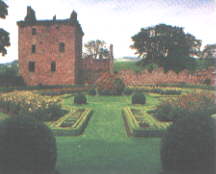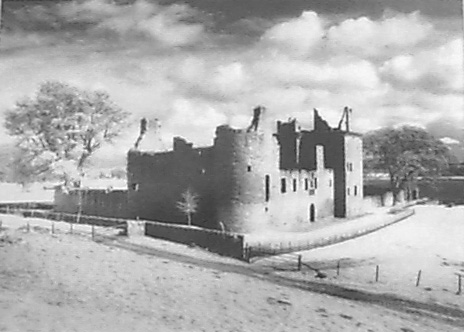
Family home of the notorious and often lawless Clan Lindsay and Crawford.
Location:
Located approximately 2 miles west of the village of Edzell, in the region of Angus.
History:
| Owner | Date | Changes/Alterations |
| Stirling Family | Late 1400's | Stirling Tower constructed |
| Sir David Lindsay, Earl of Crawford | August 1562 | After the Battle of Corrich, Mary, Queen of Scots, holds Privy Council at Edzell |
| During Cromwell's siege at nearby Dunnottar, Anne of Lindsay smuggles the Scottish crown jewels out, and hides them at Edzell. | ||
| 1580 | Large courtyard and flanking buildings added | |
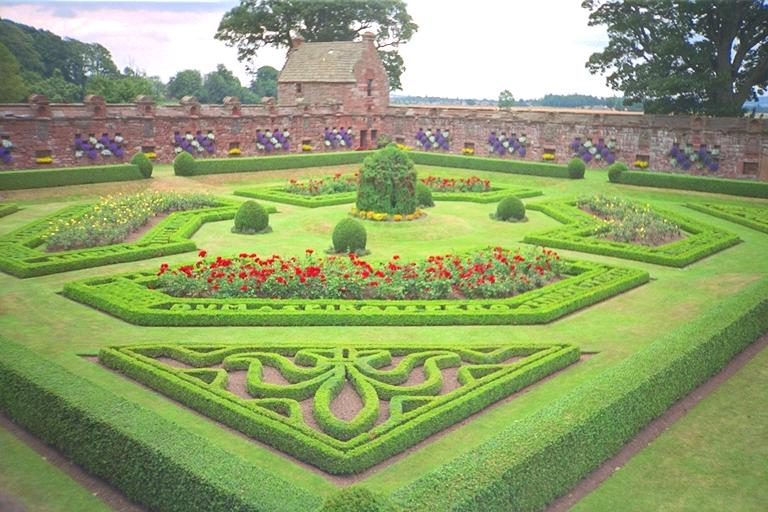
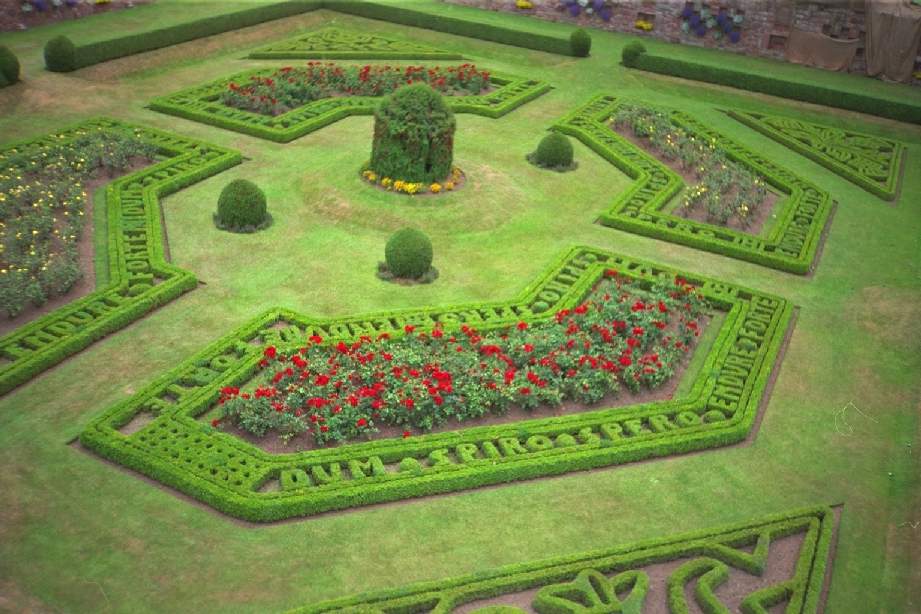
| 1604 | "The Pleasance" walled garden added | |
| 1610 | Sir David Lindsay dies, estate passes to son David Lindsay. | |
| 1715 | Castle sold to Lord Panmure to raise money for a regiment. | |
| Lord Panmure | 1715 | After failure of the Jacobite revolution, forfeited to the Crown. |
| Post 1715 | Campbells of Argyle, make Edzell their base as they clear the district of Jacobite supporters. | |
| York Buildings Company | Purchased this, and other estates to strip them of valuables. Company declared bankrupt in 1732. | |
| Trustees | 1732-1766 | Lands leased for several years, then sold to pay debts of trustees. |
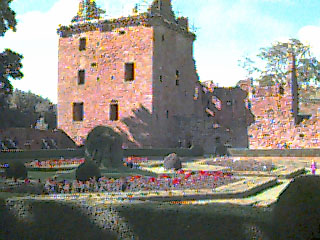
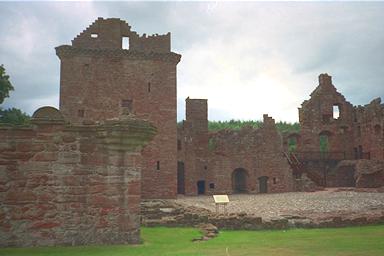
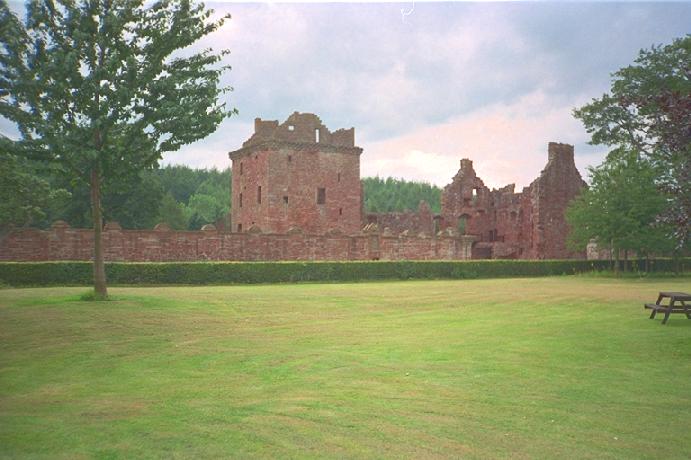
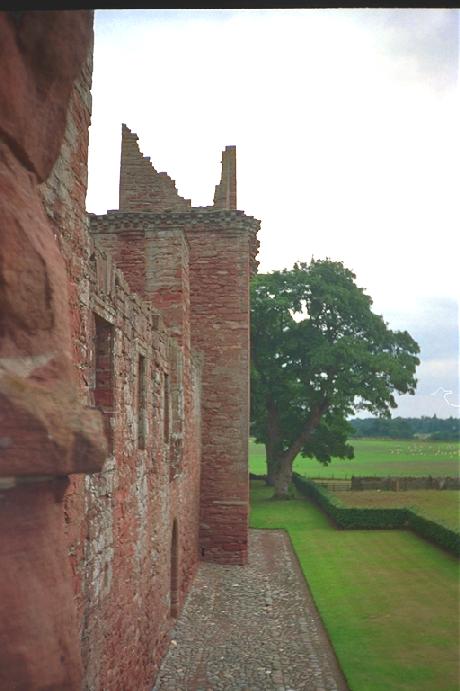
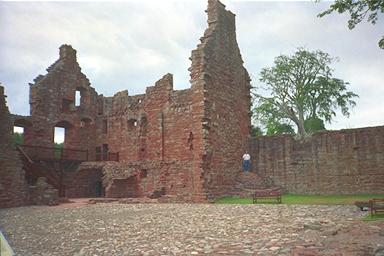
| Once the seat of power for the Lindsay and Crawford Clans, this magnificent red sandstone castle has never once been taken in battle. | |
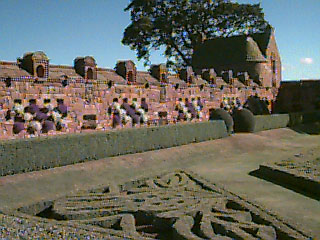
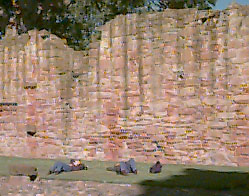
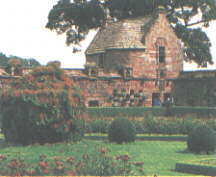
| The castle is no longer in use, and has suffered damage at the hands of local villagers, who pillaged the ruins, using stones to build many of the homes in the nearby village of Edzell. The square tower remains substantially intact, but Edzell's most striking feature is the magnificent restored walled Renaissance garden, known as "The Pleasance". The wall itself is decorated with elaborate carved stone sculptures of the "cardinal virtues", as well as the fleur de lys, shamrock, rose and thistle - symbols for France, Ireland, England and Scotland. These heraldic and symbolic sculptures are unique in Scotland, and were significant of the peaceful times anticipated when the Crown of Scotland and England were united. The flower-filled recesses in the walls add to the outstanding formal garden, which also has a turreted garden house. | 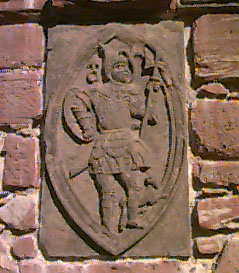 |
 | ||
 |
| |
 |
| |
 | 
| |
 |
|
 | |
 | |